
Kamares Aqueduct in Larnaca: What to See and How to Visit
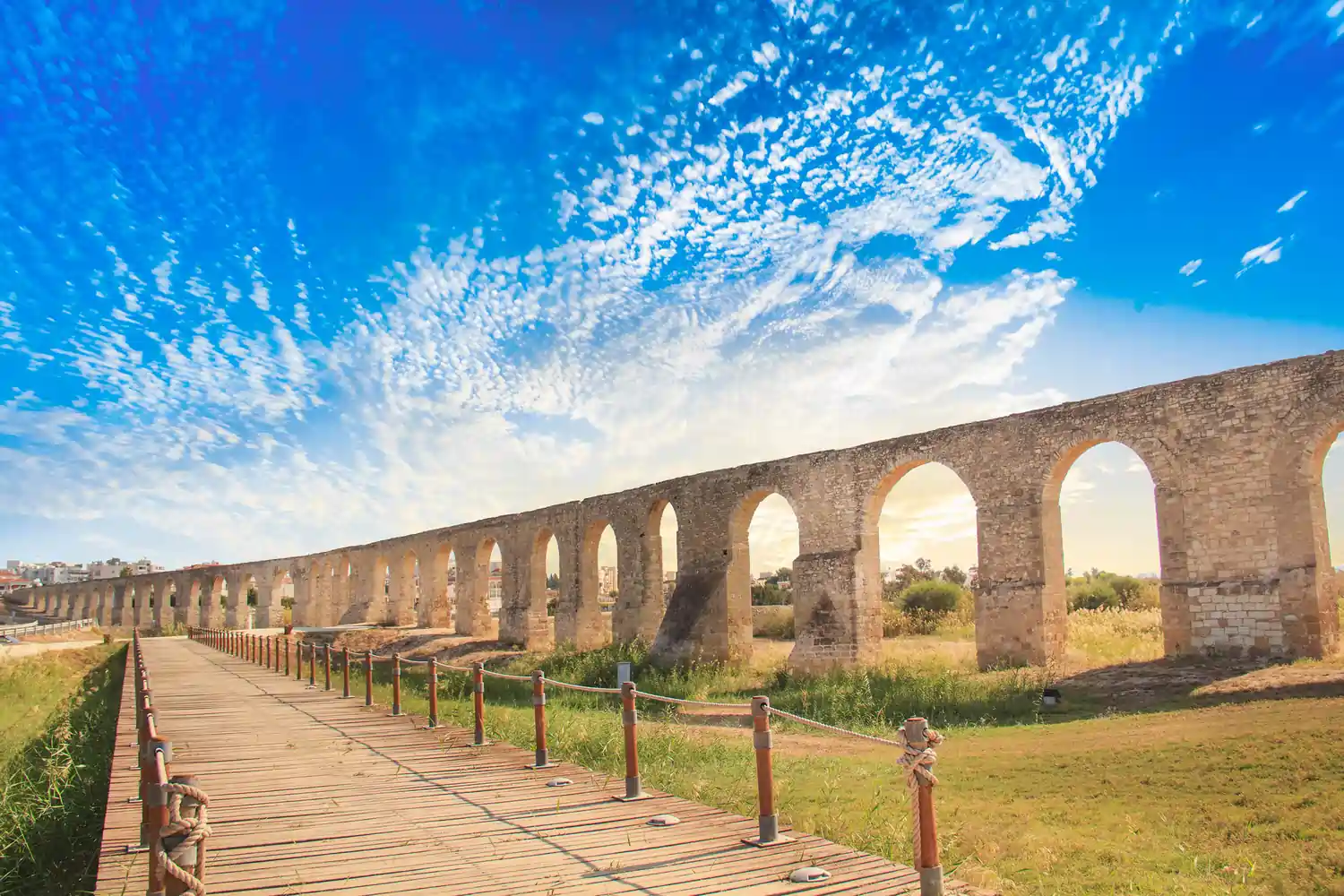
Kamares Aqueduct is where you can see how Larnaca once brought fresh water into the city. The stone arches stretch across open ground, away from the busiest streets of the centre. A short visit gives you time to walk beside the structure and appreciate the design. If you want a longer outing, a nearby footpath links the area with Larnaca Salt Lake.
What makes Kamares Aqueduct worth visiting?
Start by looking down the line of arches from one end. From that angle, the repetition shows the scale of a structure built for an everyday job. Move farther along the cobbled path and look through a few of the openings. From the side, it is easier to see how the arches carried the channel above the ground.
The name comes from the Greek word for arches. Today, more than twenty remain intact. Benches and the path near the monument make it easy to pause and look closely at the stone. It works well as a short stop for anyone who likes architecture or wants a break from the waterfront. Read the official Visit Cyprus aqueduct guide.
How the aqueduct brought water to Larnaca
Bekir Pasha, then governor of Larnaca, commissioned the aqueduct in 1746. Visit Cyprus describes its design as Roman in style. The structure itself dates to the eighteenth century. It carried water from a source roughly ten kilometres away and continued to serve the city until 1939, when modern pipes took over.
That history gives you something specific to look for. Follow the top of the structure with your eyes, then look at the arches underneath it. The upper line marks the route the water needed to follow. The arches let that line continue across the lower ground. You can see the idea without climbing onto the monument.
Plan a short stop from central Larnaca
Look up Kamares Aqueduct before you leave, especially if your route takes you across busy roads. The monument sits on the city’s side towards Limassol, away from the old-town sights clustered around Finikoudes. A taxi or car makes the stop easy to fit into a wider outing. If you plan to walk, check the route and use marked crossings.
Allow time for the stroll beside the arches and a pause for photographs. The setting is open, so bring water and choose shoes that feel comfortable on uneven surfaces. In bright weather, use the side of the path that gives you a good view without looking straight into the sun. Check the weather first if the aqueduct is the main reason you are heading out.
For photographs, try one view that shows the full row and one that frames just an arch and the ground beneath it. The first explains the scale. The second shows the stone and the curve that give the place its name. Visit Cyprus notes that the arches are lit at night. Daylight is more practical if you also want to explore the paths.
Decide whether to continue towards the Salt Lake
The footpath links the monument with the Salt Lake area. If you want to continue, check the route and work out where you will turn back before starting. Treat the longer walk as an extra part of the day. The aqueduct is a worthwhile stop by itself, especially when your time or the weather is limited. See the official Salt Lake and nature trail guide.
From Rise Urban Art Hotel’s Larnaca guide, you can pick another sight for later in the day. Visit the aqueduct when you have time to look closely, then return to the centre for lunch or a walk by the sea. If you’re planning the trip around several short outings, choose a room at Rise as your city base.

